China Top 10 Walking Aids Why Do Seniors Refuse Them?

Time:2026-10-11 Author:Aria
0%

Many families ask, “Why do seniors refuse to use walking aids and how to help?” The answer is rarely simple. A cane or walker may represent safety to one person, but dependence to another. Some seniors fear looking frail in public. Others remember a painful fitting experience, heavy equipment, or a walker that rolled too quickly across the kitchen floor.

Geriatrician Dr. Mary Tinetti, a leading falls researcher, has stated, “Falls are not an inevitable consequence of aging.” Her work reminds us that mobility deserves clinical attention, not shame. A suitable walking aid can support balance, confidence, and daily independence. However, the device must match the user’s strength, height, home layout, and walking pattern. A poorly adjusted cane may increase risk instead of reducing it.

This article examines China’s top 10 walking aids through a senior-centered lens. We consider comfort, stability, portability, appearance, and practical control. Real experience matters. A product may look excellent online but feel awkward beside a narrow bathroom door. That detail can decide whether it is used.

Helping an older adult requires patience. Ask what feels uncomfortable. Watch how the person moves. Involve a physiotherapist or occupational therapist when possible. Avoid grabbing the device or forcing compliance. That approach can damage trust.

We should also admit our limits. No ranking fits every body, room, or culture. Some recommendations may need reconsideration after daily use. The better goal is not simply choosing equipment. It is helping seniors feel safer without taking away dignity.
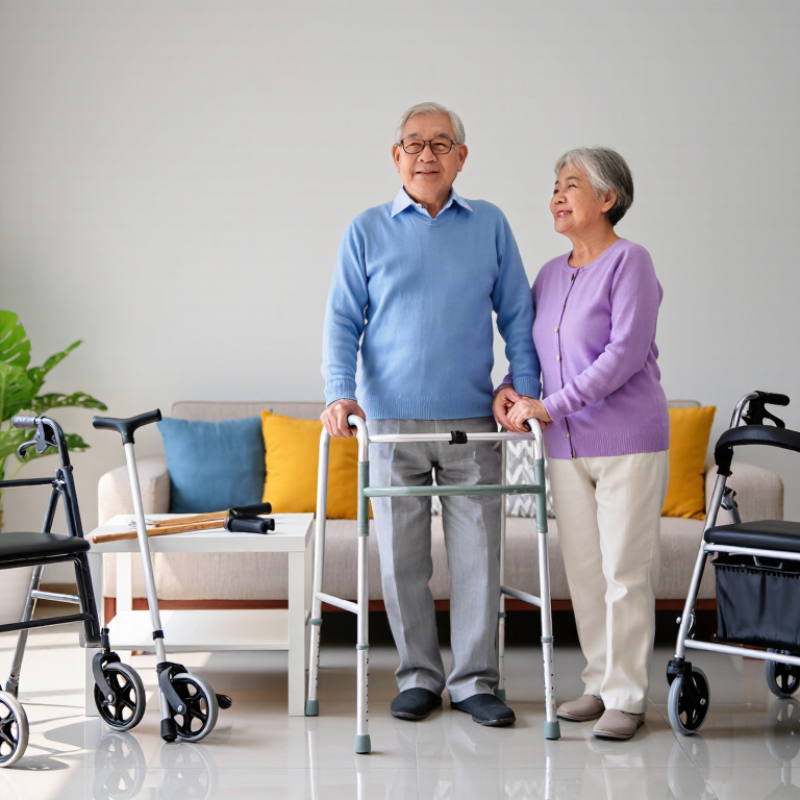
China Top 10 Walking Aids Why Do Seniors Refuse Them?

Types of Walking Aids Commonly Used by Seniors in China

China Top 10 Walking Aids: Why Do Seniors Refuse Them?

China’s ageing population is increasing demand for safer mobility support. The National Bureau of Statistics reported 296.97 million people aged 60 or above in 2023. Common walking aids include single-point canes, quad canes, crutches, walkers, and rollators. Some seniors use manual wheelchairs for longer outdoor distances. The World Health Organization reports that over 2.5 billion people need assistive products globally. Walking aids are not minor household items.

A single-point cane suits mild balance problems and uneven pavements. A quad cane offers more stability, but it feels heavier on stairs. Forearm or underarm crutches may support one injured leg, yet poor height adjustment can strain the wrists and shoulders.

Fixed walkers provide strong support indoors. Wheeled walkers move more naturally, especially across hospital corridors or apartment compounds. Rollators add seats and storage, but their brakes require practice.

Refusal often begins with poor fitting. A cane that is too tall lifts the shoulder; one that is too short bends the back. Appearance also matters. Some seniors associate walkers with weakness, although that belief is understandable but not always accurate. In rehabilitation settings, fitting should consider gait, vision, hand strength, and the distance to be walked. A device left beside the doorway is not useful if its user feels embarrassed carrying it outside. The classification is useful, but real choices remain personal and sometimes imperfect.

Key Benefits and Intended Uses of the Top Ten Walking Aids

China Top 10 Walking Aids: Why Do Seniors Refuse Them?

Walking aids work best when their purpose matches a senior’s daily problem. A single-point cane offers light support for mild balance concerns. An offset cane can improve weight distribution. A tripod cane gives wider contact, while a quad cane suits users needing stronger stability. A standard walker provides firm support during slow, careful steps. A front-wheeled walker moves more easily across smooth floors. A rollator adds wheels, hand brakes, and often a seat for outdoor rests.

Forearm crutches can reduce pressure on the hands and support users with stronger upper bodies. Underarm crutches help when one leg must carry less weight, but they require careful fitting and training. A knee walker may help someone recovering from a foot or ankle injury. It is not suitable for every senior, especially those with poor balance or weak steering control.

Fit matters greatly. A therapist should check height, grip position, walking pattern, and home hazards. The rubber tips need regular inspection. Loose brakes can create danger. Some seniors refuse aids because they fear looking weak, moving slowly, or becoming dependent. These concerns are real. A device that feels embarrassing may stay unused. I would not treat refusal as stubbornness. A short trial, familiar clothing, and practice near a kitchen counter may build confidence. Still, even good advice can miss personal preference. Comfort, dignity, and safe movement must be assessed together.

Physical and Emotional Reasons Seniors Refuse Walking Aids

Many seniors refuse walking aids for physical reasons, not simple stubbornness. A cane may feel unstable when the hand is weak, numb, or painful. A walker can also feel heavy in narrow rooms or on uneven ground. Poor height adjustment creates wrist, shoulder, and back strain. That discomfort quickly becomes evidence that the device “does not work.”

Emotional barriers are often stronger. A walking aid can feel like a public announcement of aging, illness, or dependence. Some seniors fear pity, embarrassment, or unwanted attention in restaurants and community spaces. Others worry about falling while using the aid itself. The concern is understandable. The World Health Organization reports that falls cause about 684,000 fatal injuries worldwide each year, with adults over 60 facing the greatest risk. Fear can therefore protect someone, but it can also shrink daily life.

The CDC reports that more than one in four adults aged 65 and older falls each year, while fewer than half tell a healthcare professional. Refusal may hide a previous fall, poor vision, medication effects, or low confidence. A qualified physiotherapist should check gait, strength, footwear, and device height before recommending equipment. Choice matters too. Letting an older person test a cane indoors, then walk outside, restores control. I have seen this approach change resistance, although it is not guaranteed. Sometimes the real barrier is grief over lost independence, not the walking aid.

Cultural, Social, and Practical Barriers to Their Acceptance

China’s Top 10 Walking Aids: Why Do Seniors Refuse Them?

Cultural, Social, and Practical Barriers to Their Acceptance

A walking aid can protect independence, yet many Chinese seniors reject it. Some view a cane or walker as proof of weakness. Others fear neighbors will assume they are seriously ill. This stigma matters in family-centered communities, where older adults often protect their dignity.

China’s National Bureau of Statistics reported 216.76 million people aged 65 or above in 2023. The need is large, but acceptance remains uneven.

The fear is understandable. A silver-haired parent may sit quietly while a walker stands beside the dining table. Adult children may encourage use, then choose a device without asking about daily routines. That can create resistance.

The World Health Organization reports about 684,000 fatal falls worldwide each year, with adults over 60 facing the greatest risk. Still, danger statistics rarely defeat embarrassment. Respectful conversation often works better than pressure.

Practical barriers are equally important. A device may feel heavy, unstable, or difficult on narrow apartment floors. Uneven sidewalks, crowded markets, and high door thresholds can make walking aids frustrating.

Cochrane evidence reviews emphasize proper assessment, fitting, and training for safer use. A poorly adjusted handle can cause wrist pain. A rolling aid may also move too quickly for someone with weak balance.

Professionals should admit one uncomfortable truth: recommending equipment is easier than ensuring confident, everyday use.

Ways to Choose and Introduce Walking Aids More Effectively

China Top 10 Walking Aids: Why Do Seniors Refuse Them?

Many seniors refuse walking aids because they fear looking weak, old, or dependent. A crowded room can make a bulky frame feel embarrassing. Choice should begin with daily needs, not popularity. A cane may suit mild balance problems, while a walker offers greater support after surgery or during weakness. A licensed physiotherapist or occupational therapist should assess posture, strength, walking pattern, and home hazards. A poor height setting can increase wrist pain or make falls more likely.

The aid must fit the person and the environment. Measure handle height with relaxed shoulders and slightly bent elbows. Check whether the device moves safely across rugs, doorways, and outdoor surfaces. Let the senior test it with normal shoes. Real use matters.

Introduce the aid slowly. Explain how it protects independence, rather than announcing a loss of ability. Practice near a stable counter, then walk beside the user without pulling the device. Short sessions work better than forced training. Praise controlled steps, not speed. Family members should avoid grabbing suddenly, because that can cause panic. Small details matter.

Some users need time to accept help. That is normal. A bright color, uncomfortable handle, or noisy wheel may cause rejection. Adjust the design when possible, and ask what feels wrong. Advice should be reviewed after a few days. The first choice may not be the right one.

China Top 10 Walking Aids: Why Do Seniors Refuse Them? — Ways to Choose and Introduce Walking Aids More Effectively

No. Walking Aid Category Best-Suited Situation Main Support Level Important Selection Points Why Seniors May Refuse It More Effective Introduction Method
1 Standard Walking Cane Mild balance problems or weakness mainly on one side Low The handle should be comfortable; when standing upright, the elbow is usually slightly bent and the wrist is near the top of the cane handle. It can be perceived as a visible sign of aging or disability. Present it as a tool for safer outdoor walking, not as a symbol of frailty. Practice on level ground first.
2 Quad Cane A person who needs more stability than a single-point cane provides Low to moderate The base should sit fully on the floor; the base size affects stability and maneuverability. It may feel awkward on stairs or narrow indoor passages. Explain that the larger base is intended to reduce wobbling. Demonstrate turning and stair techniques with professional supervision.
3 Two-Wheel Walker Reduced balance or leg strength with a need for forward support Moderate to high Check frame width, handle height, wheel movement, and whether the user can control the device without leaning excessively. It is larger than a cane and may be difficult to store or transport. Measure doorways and commonly used routes first. Allow the senior to choose a comfortable color and handle style.
4 Standard Pick-Up Walker People requiring a stable frame and who can lift the device safely High It must be light enough to lift while remaining stable; rubber tips should be intact and non-slip. Lifting and advancing the frame can be tiring or confusing. Use short, repeated demonstrations: lift, place, step. Stop if the user pushes the frame too far ahead or loses balance.
5 Four-Wheel Rollator Older adults who can walk but need support, rest breaks, or a storage basket Moderate Brakes must be easy to squeeze and lock; seat height, frame width, wheel size, and total weight should match the user and environment. Some users fear that it will roll away or make them look dependent. Teach brake locking before sitting and discourage using the device as a shopping trolley or pulling support.
6 Three-Wheel Walker Users who prioritize a narrow turning radius and easier indoor maneuvering Moderate It generally offers less stability than a four-wheel design; brakes and turning control are essential. The smaller base may feel less secure, especially outdoors or on uneven surfaces. Limit initial practice to smooth, uncluttered floors and arrange a professional assessment before outdoor use.
7 Forearm Crutches Partial weight-bearing needs when the user has adequate arm and hand control Moderate to high Cuff position, handgrip height, wrist comfort, and correct gait sequence should be individually adjusted. They require coordination, arm strength, and confidence. Use a physical therapist to teach weight transfer, turning, and sitting. Begin with very short distances.
8 Underarm Crutches Short-term non-weight-bearing or limited-weight-bearing after injury High The user should support weight through the hands, not press the armpits onto the pads; height must be professionally fitted. They can cause discomfort and are demanding for people with weak upper limbs. Explain the reason for temporary use and provide supervised training for standing, walking, stairs, and transfers.
9 Knee Scooter Temporary mobility when one lower limb cannot bear weight and the user has good balance Moderate to high Knee support, steering control, braking, turning radius, and the ability to transfer safely must be assessed. It is unsuitable for some users with poor balance, cognitive impairment, or limited upper-body control. Use only after clinical approval. Practice braking and transfers before using it in public areas.
10 Walking Poles People with generally good balance who want light support during outdoor walking Low Correct length, secure wrist straps, suitable tips, and coordinated use of both poles are important. Users may not understand that poles provide less support than a walker or cane. Describe them as an outdoor activity aid, while clearly explaining that they are not a substitute for a prescribed mobility device.

Common Reasons Seniors Refuse Walking Aids and Practical Responses

Refusal Factor What It Often Means Recommended Approach
Fear of looking old or disabled The aid is viewed as a loss of independence or social status. Use respectful language such as “mobility support” and link the aid to valued activities, such as shopping or visiting friends.
Poor fit or discomfort The device may be too high, too low, heavy, unstable, or difficult to grip. Arrange an assessment by a physical therapist or occupational therapist and recheck the fit after use.
Insufficient training The senior may feel unsafe because the correct walking sequence is unfamiliar. Teach one skill at a time and practice standing, walking, turning, sitting, and stairs separately.
Home or community barriers Loose rugs, narrow doorways, poor lighting, uneven pavements, or stairs can make the aid difficult to use. Inspect the actual walking route and remove hazards before choosing the device.
Belief that the aid will cause dependence The person may prefer to walk unaided even when the risk of falling is higher. Explain that the goal is safer participation and maintained independence, then agree on specific situations in which the aid will be used.
Family pressure or loss of control The senior may resist if the choice is made without consultation. Offer two clinically appropriate options and let the user participate in the final decision.
Safety note: Walking aids should be selected, fitted, and taught according to the user’s balance, strength, cognition, vision, medical condition, and walking environment. A professional assessment is recommended when there has been a recent fall, sudden change in walking ability, significant pain, dizziness, or a new neurological or orthopedic problem.
Evidence references: World Health Organization, Step Safely: Strategies for Preventing and Managing Falls Across the Life-Course; Centers for Disease Control and Prevention, STEADI fall-prevention resources; National Institute for Health and Care Excellence, Falls in Older People; NHS guidance on walking aids and mobility equipment.

FAQS

What types of walking aids are commonly used by older adults?

Common options include single-point canes, quad canes, crutches, walkers, and rollators. Manual wheelchairs may help with longer outdoor distances. Each option supports different needs.

When is a single-point cane suitable?

A single-point cane may help with mild balance problems or uneven pavements. It is lighter than many alternatives. It may not provide enough support after serious weakness.

Why might someone choose a quad cane?

A quad cane offers a wider base and greater stability. However, it can feel heavy on stairs. That trade-off is easy to underestimate.

What problems can poor fitting cause?

A cane that is too tall may lift the shoulder. A cane that is too short may bend the back. Incorrect crutch height can strain the wrists and shoulders.

Why do some seniors refuse walking aids?

Some fear appearing weak, old, or seriously ill. Others worry about neighbors’ opinions. These feelings are understandable, even when the aid could improve independence.

What practical barriers make walking aids difficult to use?

Narrow apartment floors, rugs, high thresholds, and crowded markets can create problems. Heavy frames may feel tiring. Rolling devices may move too quickly for weak balance.

How should families introduce a walking aid?

Start with a respectful conversation about independence. Let the older adult test the aid with normal shoes. Practice beside a stable counter, using short sessions.

Should a professional assess the walking aid?

A qualified rehabilitation professional should assess posture, strength, vision, hand control, and walking patterns. The home environment also matters. A recommendation alone is not enough.

What details can improve acceptance?

Ask about handle comfort, color, wheel noise, and carrying difficulty. Practice near the doorway before trying a busy street. The first choice may be wrong. That is worth admitting.

Conclusion

This article explores the ten most common walking aids used by seniors in China, including canes, crutches, walkers, rollators, and other supportive devices. Each aid serves a different purpose, such as improving balance, reducing pressure on painful joints, supporting recovery after illness, or helping older adults move more safely indoors and outdoors. However, the availability of these tools does not guarantee acceptance. Physical discomfort, difficulty adjusting, fear of falling, poor fit, and concerns about dependence can all influence a senior’s decision.

Why do seniors refuse to use walking aids and how to help? Many older adults associate walking aids with weakness, aging, or loss of independence. Family attitudes, social embarrassment, cost, inconvenient designs, and limited knowledge may create additional barriers. A more effective approach is to listen respectfully, assess individual mobility needs, choose a properly fitted aid, and introduce it gradually. Demonstrating practical benefits, encouraging professional guidance, and emphasizing confidence and independence can make walking aids feel like helpful tools rather than symbols of limitation.

Aria

Aria

Aria is a dedicated marketing professional with a deep passion for innovative strategies and a keen understanding of our company's product offerings. With a wealth of experience in the industry, Aria excels at crafting engaging content that highlights the unique features and benefits of our......